If you’re managing a medical condition, dental care can feel like one more separate appointment to keep track of. But a new diagnosis, a medication change or a persistent symptom can change what your mouth needs. Understanding those connections can help make care more practical. It also helps to know what a dental finding cannot tell us: a dry mouth, bleeding gum or sensitive tooth is a reason to ask questions, not proof of a particular illness.
Different Conditions Affect the Mouth in Different Ways
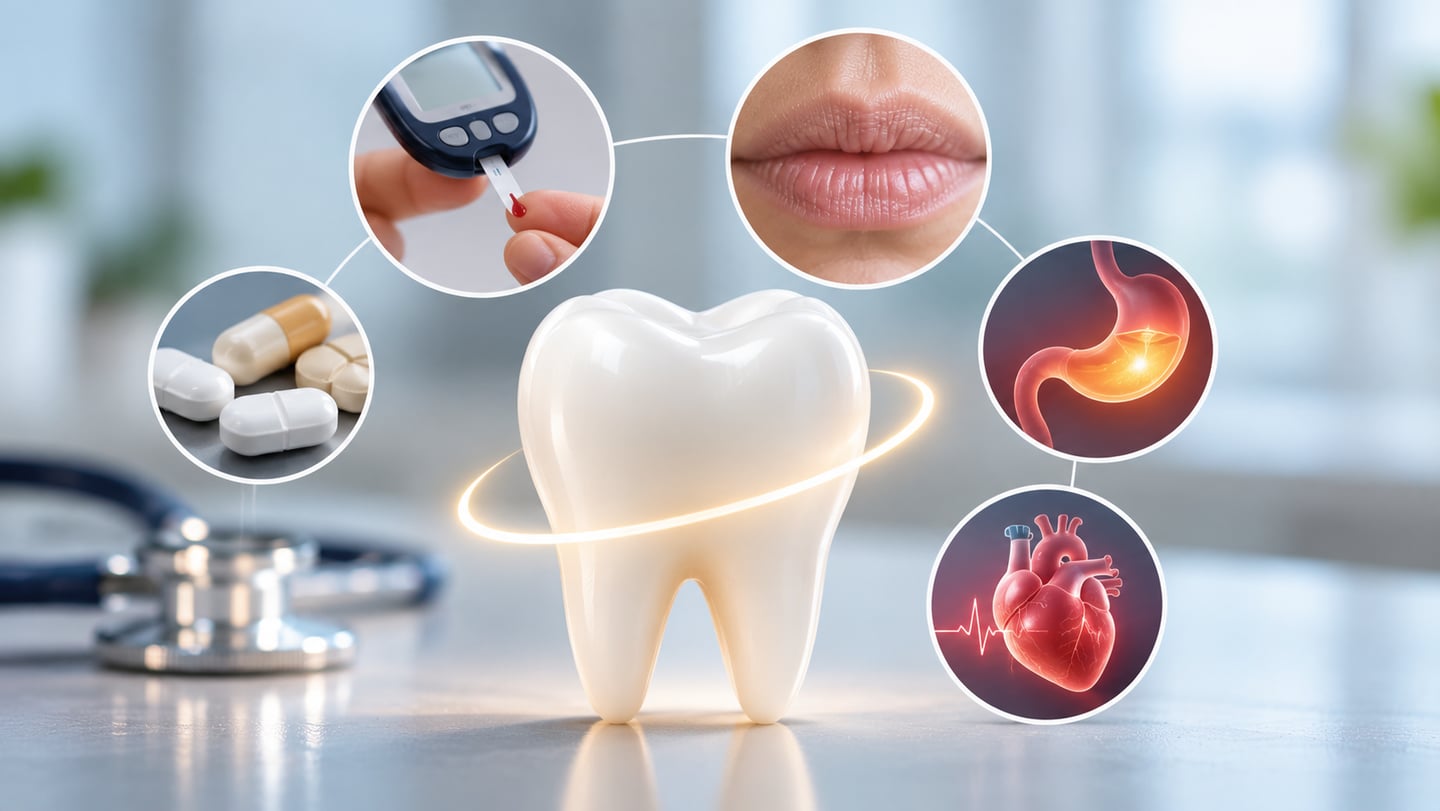
Some conditions change saliva production or healing. Others expose the teeth to acid, or affect how a dental procedure should be planned. Medicines may contribute even when the underlying condition is well managed. These are different pathways, so “oral health is connected to overall health” is only the beginning of the explanation.
Our earlier article on gum disease looks at associations with health elsewhere in the body. Here, the focus is more immediate: what to notice when you already have a medical condition, and what information helps your dental and medical teams coordinate care.
Diabetes: Gum Health, Healing and Dryness
Diabetes increases the risk of gum disease, especially when blood glucose is not well controlled. It may also slow healing and contribute to dry mouth or thrush, a fungal infection that can cause soreness and white patches. These problems are possibilities, not an inevitable part of living with diabetes.
The relationship with gum disease runs in both directions: gum disease can make blood glucose harder to manage. Dental care supports the broader plan, but does not replace medication, monitoring or your clinician’s advice. Share changes in your diabetes care and any recent concerns about glucose control. Persistent bleeding, swelling, dryness or mouth soreness are useful details to report rather than simply putting up with them.
Autoimmune Conditions: When Saliva Becomes Part of the Problem
Sjögren’s disease is an autoimmune condition in which the immune system attacks moisture-producing glands, including those that make saliva and tears. Dry eyes and dry mouth are common symptoms. Reduced saliva can make chewing, speaking and swallowing uncomfortable, and increases the risk of cavities and mouth infections.
That doesn’t mean every dry mouth points to Sjögren’s, or that every autoimmune condition affects the mouth in the same way. If you have an autoimmune diagnosis, explain which symptoms and medicines apply to you. If dryness is new and persistent, mention it to both your dentist and medical clinician, particularly if it comes with dry eyes. A dental examination can identify oral consequences; the medical diagnosis may require a separate evaluation.
Medicines Can Change Your Dental Needs
Many medicines can cause dry mouth, including some used for high blood pressure, depression and bladder problems. Saliva helps wash the mouth and protect teeth. Less saliva can therefore change cavity risk even if your brushing routine hasn’t changed.
Bring an up-to-date medication list, including nonprescription products and supplements. Mention when dryness began and whether it followed a dose change. Don’t stop a prescribed medicine on your own. Your prescriber can assess alternatives when appropriate, while your dentist helps address the oral effects. Small sips of water and sugar-free gum, if comfortable to chew, may help symptoms; persistent dryness may need a more tailored prevention plan.
Reflux: Acid Wear Is Different From a Cavity
When stomach acid repeatedly reaches the mouth, it can erode tooth surfaces. This differs from decay caused by acids produced by plaque bacteria, although both can affect the same person. Erosion may cause sensitivity or changes in tooth shape, and lost tooth structure does not grow back.
Wear alone cannot confirm reflux: drinks, diet and other factors may also contribute. Share recurrent reflux or vomiting with your medical and dental teams so that care addresses the source as well as the teeth. After vomiting, rinse with water instead of brushing immediately. Ask for advice suited to your situation, especially if episodes are frequent.
Heart Conditions: Planning Care With the Right Information
A heart diagnosis does not have one characteristic appearance in the mouth. Its relevance may instead be the medicines you take or precautions needed for particular procedures. Preventive antibiotics are recommended before certain dental procedures for a limited group of patients at highest risk of a serious outcome from infective endocarditis, such as some people with prosthetic heart valves or a previous episode of that infection.
They are not routinely needed for everyone with heart disease or high blood pressure. Tell your dental team the exact diagnosis and any advice from your cardiologist. If you take a blood thinner, make sure it is on the medication list; any proposed change should be coordinated with the prescribing clinician.
What to Bring to the Conversation
A useful update is often brief: “I started this medicine last month and now my mouth feels dry,” or “I’ve had more reflux and my teeth feel sensitive.” Bring your current medicines, relevant diagnoses and your medical clinician’s contact information. Ask whether any of that changes your prevention plan or the timing of a procedure.
Notice symptoms without trying to interpret them alone. Persistent soreness, unusual patches, ongoing bleeding or a change that does not settle deserves an examination. You can ask what looks local to the mouth, what needs medical follow-up and how the teams will share information with your permission.
Frequently Asked Questions
Can my dentist diagnose diabetes from my gums?
No. Gum findings can raise questions, but diabetes is diagnosed through medical assessment and testing. Similar oral symptoms can have several causes.
If I brush well, why would I develop more cavities?
Changes in saliva, medicines or acid exposure can alter risk. A change in dental health is worth investigating rather than treating as a personal failure.
Does dry mouth just mean I need more water?
Not necessarily. Water may improve comfort, but reduced saliva can have causes that hydration alone does not resolve.
Do I need antibiotics before a cleaning because I have heart disease?
Not automatically. The decision depends on the specific heart condition and procedure. Your dentist and cardiologist can confirm whether you fall within the recommended high-risk group.
Should I wait until my medical condition is completely stable to mention dental symptoms?
Mention them now. Your teams can decide what can proceed, what needs coordination and what should wait. You do not have to make those decisions alone.
Keeping Everyone Working From the Same Information
A medical update belongs in the dental conversation, even when it seems unrelated to your teeth. At Stockton Creative Dental, sharing that context helps us understand what has changed and what questions need follow-up. The aim is a manageable plan that fits your health and everyday life.